Recent Posts

    We are provide with all the latest news from ncc directorate . latest updates News, tips ,tricks, for joining ncc. We have also the collection of answers of your Que's and query's

    Pages

    About Us Services Blog Contact Us Learn

    Tuesday, December 11, 2018

    4 Toughest Indian Army Bases To Live In

    Hello Warriors. Our soldiers are the prime guardians of our nation and are respected for their bravery, discipline, and unconditional patriotic values. Be it taking over Siachen, the world’s highest battlefield or to execute the world’s biggest helicopter rescue mission during Operation Rahat, the Indian Armed Forces have always been there in the time of need, all beyond their selfless call of duty.
    That said, the Indian army protects the entire length and breadth of the country including places which face extreme weather conditions. While some are located in exciting places, others are not so great. A number of Indian Army bases have been deemed awful for reasons ranging from active insurgency, to insufferable weather, to a lack of activities.
    Here we bring you 4 such toughest and challenging bases of the Indian army that will send a chill through your spine and make you admire them even more:
    1. Indo-Chinese Border (Sikkim and Arunachal Pradesh):
    Sovereignty over two large and various smaller separated pieces of territory have been contested between China and India. The westernmost, Aksai Chin, is claimed by India as part of the state of Jammu and Kashmir and region of Ladakh but is controlled and administered as part of the Chinese autonomous region of Xinjiang. The other large disputed territory, the easternmost, lies south of the McMahon Line. It was formerly referred to as the North East Frontier Agency, and is now called Arunachal Pradesh.indo chinese border fight
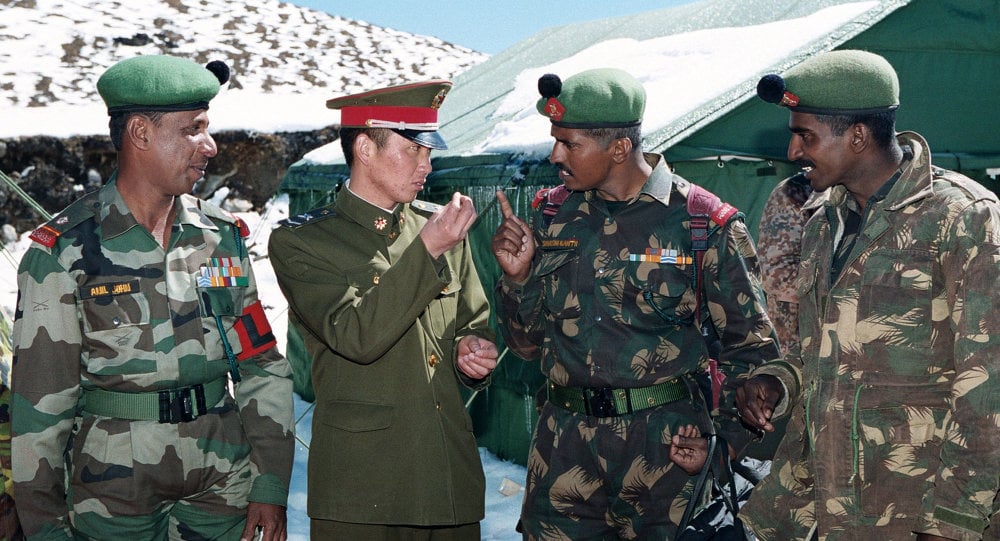
    The 1962 Sino-Indian War was fought in both of these areas. In 2006, the Chinese ambassador to India claimed that all of Arunachal Pradesh is Chinese territory amidst a military build-up. At the time, both countries claimed incursions as much as a kilometre at the northern tip of Sikkim. In 2009, India announced it would deploy additional military forces along the border and since then the army patrols strategically important areas like the Nathu La Pass with pockets of the region witnessing rapid transitions in a single day. The foot soldiers have to be prepared for everything from bright sunshine in the morning to rain or snow showers in the evening in these areas.

    1. Indo-Pak Border (Rajasthan):
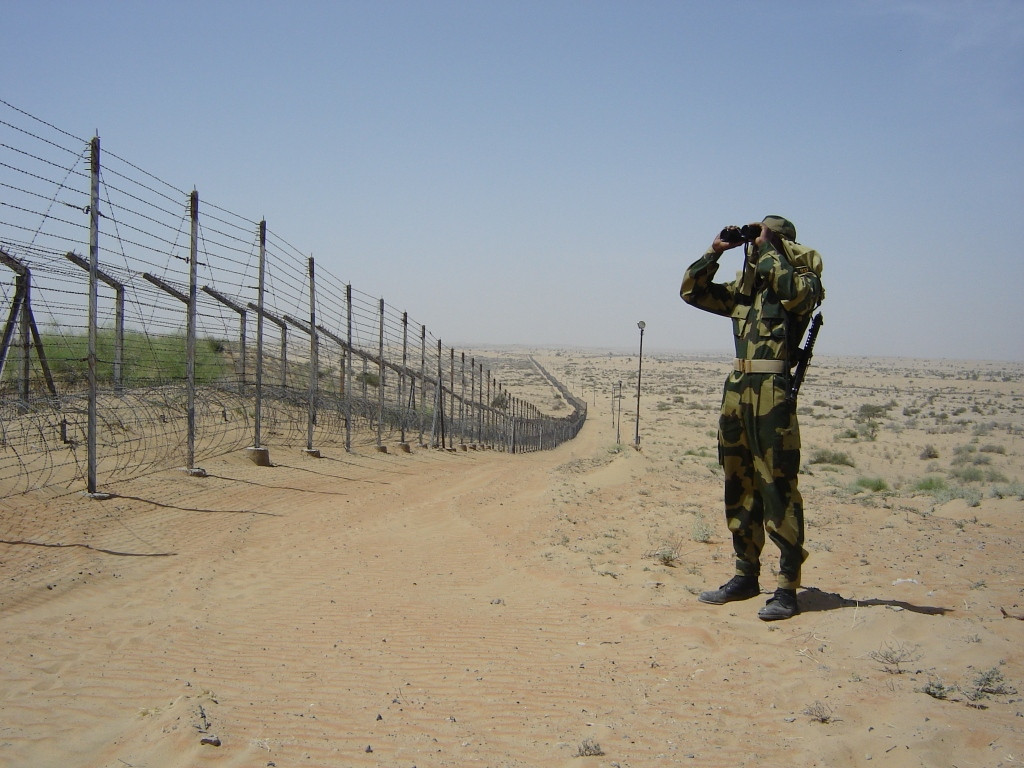
    India had fought most of its wars with Pakistan post-independence. The famous one was the Battle of Asal Uttar in which CQMH Abdul Hamid did the supreme sacrifice for the country in the world’s largest tank battle after WW2. Since then, this strategic post has been under frequent monitor by the army and the BSF. The Indian Armed Forces guard this border amidst extremely hot weather conditions, sometimes, shooting up to 50°C in some regions while dust storms, sand storms, and the blistering heat combine to make the desert region an unfit place for habitation altogether. A place 14 km away from the border, Tanot, has a nice temple managed by the BSF but no one is allowed to visit even this place.Indo-Pak Border (Rajasthan)
    1. Dras (Kargil, J&K):
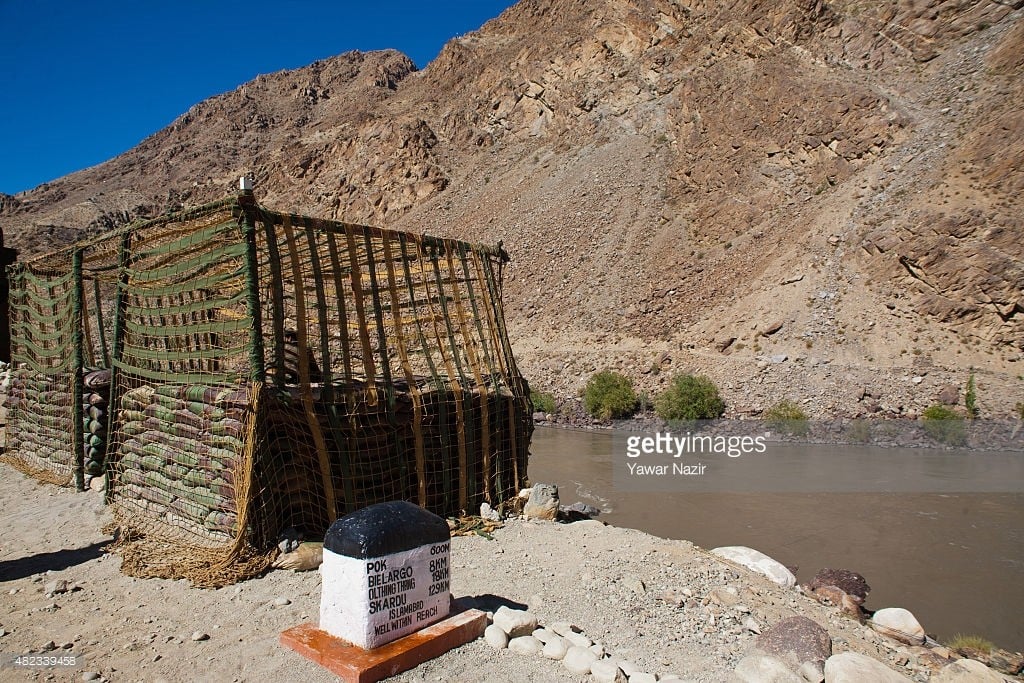
    If you remembered your geography classes in 8th or 9th standard, you can recall that Dras is the coldest place in India with temperatures going as low as -60oC in winters. This place observes a sub-arctic climate and is known as the second coldest inhabited place in the world! In places like Dras, there is always a chance of getting affected by Hypothermia and freezing to death, literally. But, our brave soldiers have beaten the odds and after the Kargil war of 1999, have set up a camp in the area. The temperatures in the region remain in single digits throughout the year, barring a couple of months. It is very hard for a common man to survive a day in the camp, let alone weeks and months as passed by the brave-hearts.Dras (Kargil, J&K) Indian Army
    1. Siachen Glacier:
    Siachen Base Camp is north from the town of Leh in Jammu and Kashmir. The Base Camp of Indian Army in the Siachen Glacier region is within Indian Territory but is claimed by Pakistan as theirs. The temperature goes down to -50oC during winters. The Indian Army man the Glacier operations from the Base Camp. The average winter snowfall in the region exceeds 1000 cm. Soldiers even die from harsh weather conditions in the region. The conditions are so tough that prior to their deployment in the Siachen region, soldiers have to undergo a training camp which helps them acclimatize to the conditions in the region.Siachen Glacier Indian Army
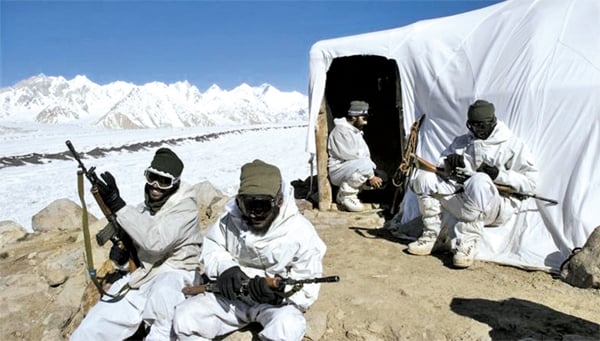
    Speaking numbers, more deaths in Siachen have been recorded due to the weather conditions than due to the actual purpose.

    Friday, December 7, 2018

    8 Punishments Or Ragda Faced By Cadets In Indian Army and Ncc

    Indian Army is the second name of discipline and things that happen in the academy makes you strong to fight against your enemy and your emotionsduring deployments. Indian Army has troops strength of around 1.3 million in active service. Indian army is one of the biggest employers in the world, yet one the most disciplined organizations in the world. Indian Army didn’t just make the soldiers stand in line and told them the do’s and don’t for rest of their service in the army.
    Indian Army has various institutions which turns a normal civilian into a warrior full of discipline, knowledge, and courage. Many cadets who usually have no idea what kind of training they will face when they join the army, even in the first weeks many want to quit. It gets hard due to extreme physical and mental training which is not less than a torture. After some days they adapt the routine but there is no place of leniency in the discipline in the army, that’s why whenever they commit anything which is against the rules they face punishment or “Ragda” as they say it.
    There are eight most common methods of Ragda which are:
    1. Running with backpack while hands up and carrying heavy dummy rifles
      Running is the most common punishment in the academies like NDA, AFA, INA and IMA. It could be any mistake for which you can have the punishment of running for 5 km or few rounds of parade grounds. The cadets have to run with anything backpacks, guns and what not. If you are late in class or roll call, start running. If the task isn’t completed, start running.
    Indian Cadets running a cross country
    2. Maharaja
    Maharaja is one of the most famous punishments adopted by various military training institutions, in this punishment, you have to lift your body vertically by the support of only your head, the pain in this punishment could be unbearable but it improves the brotherhood among cadets.
    Indian cadets during Maharaja position
    3. Drill roasting
    Parade or drill is one of the important parts of the personality of any Indian soldier, he/she should be perfect in the drill. If you are not doing the drill properly then you can be roasted in front of every cadet, and it can get worse, if it happens to you. Also, Your leaves and liberty can be cancelled.
    Cadets having fun after POP
    4. After roasting, how about some crawling in wired trench.
    Another common punishment is crawling on the small trench, wired from above. It is very exhaustive punishment and sometimes the trench is filled with mud, making it a real nightmare.
    5. Cold Water Crawling
    Cold water crawling is fun unless its winter season, in this exercise your has to move forward in the water with your hands on your back.
    Cadets crawling in cold water
    6. Front roll a.k.a Gulati
    Everyone has done front rolls in their childhood but in the academy, they just raise the toughness of the roll by adding heavy backpacks. You have to roll on the hard surface which can break your body terribly, and on the hot days, it is no less than hell.
    Front roll punishment
    Source – SSBCrack
    7. Drenched with fellow course mates
    If you ask a cadet about one of the best feeling he had in the academy, he can possibly tell you about his memory of getting drenched with his course mates. It is fun when we start but pains later, but you enjoy it cause it is with your brothers.
    Cadets getting drenched with coursemates
    8. Pick up the heaviest


    This punishment is given during the route march when some cadet is caught resting during the march. The gentleman cadet has to pick and carry the heaviest cadet in the march, so don’t stop.

    Monday, December 3, 2018

    Here’s How To Do Para Basic Course As An NCC Cadet

    Here’s How To Do Para Basic Course As An NCC Cadet


    If you are an NCC cadet, here is how you can do the Para Basic Course:

    The Para Basic Course is held twice in a year in the months of September and November.
    Each camp has got 40 reserved vacancies for NCC cadets – 20 for SWs (girls) and 20 for SDs (boys). DG NCC allots the vacancies to 17 directorates based on their strength. Directorates with higher strength get more vacancies than directorates with less strength.
    Generally, the directorates with higher strength get no more than 2–3 vacancies, 4 is extreme. In my directorate (AP and T), we get 3 vacancies for this course as its enrolled strength is a quite large in number.
    So, next, your DDG allots vacancies to each group headquarter, one at a time. My NCC group, Hyderabad got the vacancies last November (2016), so this time (September 17), Kakinada group got the vacancies. In some cases, each group may get one vacancy each.
    These groups, in turn, allot the vacancies to the respective units/squadrons under its command. The unit getting the vacancy is no more than lucky enough than the person chosen to go for the course.

    The Physical Requirement – The Selection:

    The physical requirement of this course is running 1 km in 4 minutes, 5–6 pull-ups, 22 push-ups and 36 squats. So it needs very good stamina to be a paratrooper. The training and selections of the interested candidates start from about 4 months before the camp. And only the luckiest and fortunate person gets to be one of the chosen few. They are interviewed at the unit level, group level and then directorate level to be a part of the Para Basic Course.
    The minimum criteria are as follows (but the required criteria is way-way higher than this):
    • 1 km run in 4 mins
    • 36 squats
    • 32 sit-ups
    • 5 pull-ups
    • 22 push-ups
    Now, since this is a very prestigious camp, the competition for this is also very high, due to which the standards are also raised higher.
    It now all depends on your directorate to select cadets based on new standards. But when you get into PTS, all the training will seem easier because they’ll follow their set standards and also because NCC cadets will have very less time for this course.

    The Para Basic Course:

    In this course, you are entitled to 3 jumps during the daytime and if time permits, you will do all the 5 jumps (including one night jump and one with equipment). The camp lasts for about a month. The initial days are to train and build stamina and confidence of cadets to make the jumps.

    The jumps are easy, the training is hard.

    PTS, Agra:

    The training for Para Basic Course is held at Paratroopers Training Schools, Agra along with all the Indian commandos. Yes, Para, MARCOS, NSG and Garuds will be your roommates and course mates at PTS. You will be shocked to witness the simplicity holding very high potential. Not in your lifetime, you will probably see so many commandos at the same time at the same place.
    For the place of stay, you will be staying at Army Airborne Training School, located just beside Air Force Station, Agra.

    The Daily Routine:

    God! This topic has very mixed emotions. The routine starts with waking up at 4 – 4:30 in the morning, getting fresh and some exercise. This is followed by a light breakfast (because there’s no time to eat breakfast).
    The ground training for Para Basic Course is 12 days.
    You will have to report at PTS in the morning between 6:00 – 7:00.
    Then starts the day!
    You will be running, warming up and exercising for the next 45 minutes to 1 hour. This will be the first period.
    In the next subsequent periods, you will be given para jumping related training. This will go on until the afternoon when you will head back to AATS for lunch. If there is a class, you will again report back to PTS. If not, you will get some rest and then time for the evening run.
    In the evening, you will be exercising and playing sports/games, after which you will get freshen up and get ready for dinner.
    The time left is socializing time with your course mates. I used to play UNO at that time. It is followed by Night Roll Call and lights off!
    This will go on for 12 days. In these 12 days, you will be shown how Parachute is packed and repaired at PPRC one day. And one day, you will experience flying in IAF AN-32 from which you will have to jump later.

    After the Course:

    After you have completed your course, you will be authorized to wear the Para-Wings on your uniform. Although maroon beret is not authorized for NCC cadets, permission from the unit CO can be taken to wear it.

    Sunday, December 2, 2018

    How to join ncc without college - nccindia -nccnagrota

    How to join ncc without college - nccindia -nccnagrota

    You can join NCC as an open cadet , if your college or institute not havinv it.
    1. Firstly decide which wing you want to join . You can join it as army , navy and as an air force cadet.
    2. Google the nearest NCC unit to your place , or search which college have NCC and get the details from their seniors about the NCC unit.
    3. College NCC are connected with the army units . Go there and meet the subedar major or Training jco/nco of that batallion.
    4. Usually they will guide you about the further procedure .
    5. Open cadets will be sent to other college of same university which have NCC. Or you will be having your NCC Drills and training in that batallion itself depending upon the no. Of vacancies they have.
    6. If you are referred to any college . That college will take your physical efficiency test , written test & even interviewsdeoending upon their selection criteria.
    Go and join it buddy , it will be the most adventurous & daring thing you are choosing in your college life. Army gives special priorities to NCC “C” certificate holders in officers as well as in other rank posts .
    After you join , must ask your seniors about the
    REPUBLIC DAY CAMP . they will guide you further. Attend that . You will be completely transform

    How are cadets selected for YEP in NCC?

    How are cadets selected for YEP in NCC?

    Well, for attending Youth Exchange Program (YEP) you are supposed to attend the Republic Camp(selection procedure starts from Pre RDC Camps or may be from IGC(Inter Group Competetion)) after getting selected for RDC you will have to compete with the cadets of other directorate in several competetion which are performed in several stages like Written test, Group Discussion , Individual Drill competetion and lastly a DG Interview.


    How can I prepare myself for Thal Sainik Camp, being a first-year NCC cadet?

    How can I prepare myself for Thal Sainik Camp, being a first-year NCC cadet?

    Focus more on your physicals part.
    Run excessively, a minimum of 2 kms a day is a must,followed by 100 pushups 100 sit ups and squats take atleast 10 pull ups.
    Do these and you will thank me later while doing obstacles. When you see people struggling in walls you will cross them like a piece of cake.
    One of the most important thing about THAL SANIK CAMP is they will test your stamina for you will require that a lot. Proper diet is quiet essential .Avoid soda and biryani at all cost, stamina is the only thing you will require,you may hate me for this answer but trust me only if you sacrifice certain things in life you achieve certain things. If you want to wear that blazer, sacrifice now.
    For there is no gain without pain, pain is temporary glory is forever.
    This what i followed,
    1.Three cups of milk and 6 bananas along with steam boiled food like idli or dosa for breakfast.
    2.For lunch i took crazy amount of rice that i nearly puked for the first few times,because it will take time for your intestines to get used to it.
    3.Again evening 3 eggs, to compensate the proteins i lost in running.
    4.Chappati along with dal,keep it light for it will digest soon and will give the nessecary energy required for the running next day.
    now i know this diet is extremely difficult to maintain,but as i said you are gonna be a TSC cadet,learn to do things the hard way.
    Follow this and you will be perfectly ready for TSC as far as physicals are concerned
    Get used to ragada start enjoying ragada you will thank me again later.Ragada is given only for your benefit .
    I was a second year student in TSC ,but there was this third year srgt . who was in benddown along with me,he was’nt able to maintain that position for more that 5 minutes, that moment i remembered my senior telling me enjoy the ragada here ,you will enjoy tsc there.
    Be thorough about rifles, health and hygiene, map reading, field signals and all those stuff,be expressive while answering those it will create an impression among those PI staff that you are really motivated .
    They look for motivation ,josh, and jiger in you.
    If you have all these i can bet that you will reach Delhi unless there are unscrupulous incursion of politics into military affairs,about which i dont want to comment for i dont want to discourage you.
    Go ahead and rock TSC show them what a badass you can be for TSC IS FOR PEOPLE WHO CAN WAKE UP AT 4 DO OBSTACLES TILL 8 AND GO FOR RIFLE SHOOTING AND THEN MAP READING FIELD SIGNALS AND JUDGING DISTANCE AND GET THEMSELVES READY FOR LINE AREA AND AFTER THIS TIRING DAY CAN STILL IN THOSE HEALTH AND HYGIENE CLASSES WHILE THEY SEE THEIR RDC PEOPLE ENJOYING THE CULTURALS .
    So prepare yourselves for all these and there you are ready to be a TSC cadet and prove yourselves worthy of that combat dress.

    Tuesday, February 27, 2018

    List of all ncc camps

    List of all ncc camps

    Republic Day Camp (RDC)

    Before RDC all group headquarters have to face the IGC(Inter-Group Competition)

    NCC Republic Day Camp is the culmination of all NCC Training activities. RDC is held at Garrison Parade Ground, Delhi Cantt from 01 to 29 Jan. 1850 Selected NCC Cadets from 17 directorates attend the Camp. The Camp is inaugurated by the Vice President of India and culminates with Prime Minister's Rally on 28 Jan.[10]

    During the camp visit of Raksha Mantri, Cabinet Ministers, Chief Minister of Delhi, three Service Chiefs and various State Ministers/VIPs are also organised.

    During the RDC, various competitions are conducted amongst the 17 NCC Directorates to decide the Champion Directorate for award of Prime Minister's Banner. Competitions are keenly contested in various events such as National Integration Awareness presentation, Drill, Line & Flag Area, Cultural Programs i.e. (group song, group dance & ballet), Best Cadet of Senior Division (Boys) and Senior Wing (Girls) in each Service - Army, Navy & Air Discipline and Best Cadet Boys and Girls each from Junior Wing. Aero modelling and Ship modelling are also conducted during RDC.

    List of Gold Medal Honors All India Best Cadet in Republic Day Camps

    1997 - CSM.Muhammad Zafar Sadeed(Karnataka) 1999 - CUO.D.Bohindhar Sharma (Maharashtra) 2000 - CSM. kg.Kuldeep Singh (Punjab) 2001 - CUO.D.Sandeep Gohai (Maharashtra) 2002 - SGT.M.Pradeep Chawla (Delhi) 2003 - CUO.B.Baasha (Tamil Nadu) 2004 - CUO.A.Amit Kumar (Maharashtra) 2005 - SGT.B.Sridhar (Tamil Nadu) 2006 - CUO.K.Vinoth Kumar (Karnataka) 2007 - CSUO.D.Arpan Patel (Tamil Nadu) 2008 - CUO.Divya (Tamil Nadu) 2009 - CSUO.P.Gokulakrishnan (Tamil Nadu) 2010 - CSUO.R.Monika(Tamil Nadu) 2011 - CUO.M.Rajesh Kulkarni (Maharashtra) 2012 - CUO.Deeksha Patel (Maharashtra) 2013 - CSUO Pushpendra Singh (Maharashtra) 2014 - CSUO Prem Kolapkar (Maharashtra) 2015 - CSUO E.Jessy Jennifer (Tamil Nadu ) 2016 − SUO Adithya SP (Karnataka & goa)

    List of Gold Medal Honors All India Parade Commanders in Republic Day Camps

    2003 - CSUO.Chanana (Delhi) 2004 - CUO.Rajesh (Maharashtra) 2005 - CSUO.Patel (Delhi) 2006 - SUO Amrit Kumar (UP & UA) 2007 - CSUO.S.Elango (Tamil Nadu) 2008 - CSUO.Guru (Tamil Nadu) 2009 - CSUO.P.Gokulakrishnan (Tamil Nadu) (All India Best Cadet and All India Parade Commander of the Year 2009) 2010 - CUO.Kishore (Delhi) 2011 - CUO.Mahendhar (Maharashtra) 2012 - CUO.Praveen S Kumar (Delhi) 2013 - CSUO.Shukvendar Shukla (Maharashtra) 2014 - CSUO. Dhanraj Lahane (Maharashtra) 2015 - CSUO. Aman Jagtap (Ahmednagar - Maharashtra)


    Chief of Naval Staff Admiral Devendra Kumar Joshi interacting with NCC Cadets at NCC Republic Day Camp 2014. DG NCC Lt Gen Aniruddha Chakravarty is also seen

    Combined Annual Training Camps (CATC)

    In C.A.T.C., the boys(Senior & Junior Division)and girl cadets(Senior & Junior Wing)of a particular NCC unit participate in the 10-day camp. Classes are conducted as per the given syllabus wherein certain aspects of NCC training are taught once again. The camp acts as a refresher training for the cadets and they are also trained in basic skills of survival and emergencies besides other topics. They are taught certain skills pertaining specifically to their Wing for e.g., a Naval cadet is trained in boat-rowing, oaring, Semaphore, etc. Another activity in the camp is the "dogwatch" wherein two cadets are to stay on sentry duty for two hours at any time given time of the day. Those caught sleeping, especially during late night or early morning shifts, or otherwise missing from duty are severely reprimanded or penalized. Cadets are also introduced to weapons such as a .22 caliber rifle.

    National Integration Camp (NIC)

    NIC is to propagate national integration among cadets and society.'Only the best cadets in drills and march are sent to represent their states.'This camp is considered for SSLC and higher secondary course(+2) grace mark These camps are conducted on All India basis and help bridge the cultural gap among various States of India. In addition, there are six special NICs conducted at Leh, Nagrota (J&K), Chakabama (NER, Nagaland), Srinagar, Lakshadweep and Port Blair.

    In this camp cadets are taught leadership quality and stage daring

    Advance leadership course

    Advanced leader ship camp is conducted in many places. in this camp the officers give cadets training for ssb screening and entrance.

    Army Attachment Camp

    These camps are conducted by the NCC in collaboration with Indian Army, as the willing cadets are attached to the specific regiments undergoing the training period of 10–15 days. In this camp, the cadets are trained by the instructors of the particular regiment, in the military tactics including day/night warfare & also get familiar with the weaponry.

    Hiking And Trekking Camps

    They are full of adventure, Cadets who want to experience something adventurous must attend them. Create memories never forgotten. the cadet who wants to participate, have a good stamina for walking. This camp is full of adventure.

    Thal Sainik Camp (TSC)

    The TSC is a 12 days camp conducted in Delhi every year in the late autumn, in which the cadets are selected from all 17 directorates (30+3 SD/JD and SW/JW cadets from each directorate), by the selection procedure conducting 3 pre-TSC camps each of 10–12 days in a week interval. The selected cadets then are sent to the TSC to represent their respective directorates in the following competitions:

    Obstacle course - In which the obstacles includes 6-feet wall, zig-zag, double ditch, balancing, 3-feet bar, left bar, right bar, incline, etc. It is done after wearing full tactible gear with rifle.

    Firing - It consists of two types - Shooting(Grouping, Snap-shooting & Application)& Advance Firing (Standing, Kneeling & Lying positions). It is done with a standard .22 caliber rifle at the range of 25 meters & 50 meters.

    Map Reading - Which includes working with Prismatic Compass, service protector & a map. It is conducted in the day or at night for finding 'North', 'Grid Positions' & 'Own Position', with the help of landscapes at the unknown location in which cadets are dropped.

    Home Nursing - It consists of medical activities, as how to aid & heal a soldier in war.

    The directorates also get marks by the inspection of their respective accommodations, dressing and some extracurricular activities by the inspecting squad. Arranging the numbers, the winning directorate gets a cup with decorations from the Director General, NCC on the closing day of the TSC. Two concurrent TSCs are conducted at RD Parade Ground, Delhi Cantt every year. i.e. S D / JD boys and SW / JW girls. 640 Boy and 640 Girls cadets take part in this camps

    Vayu Sainik Camp (VSC)

    This centrally organised camp is organised for Air Wing Cadets. Cadets from all directorates attend the camp. VSC is generally conducted in the month of October at Jodhpur.

    Nau Sainik Camp (NSC)

    This centrally organised Naval Camp is conducted annually for selected Naval Wing Cadets. Boat pulling, semaphore, whaler rigging, drill competitions are the main attraction of the camp. It is generally held at Naval Maritime Academy (NAMAC) at Visakhapatnam but started to be held at Karwar from 2014.

    All India Yachting Regetta (AIYR)

    This centrally organised Naval Camp is conducted annually for selected Naval Wing Cadets. Yachting (Sailing) is the main attraction of the camp. It is generally held at Naval Base INS-Chilka at Odisha.

    Rock Climbing Camps (RCC)

    Eight rock climbing camps are held each year to expose the cadets to the basics of elementary rock climbing and to inculcate spirit of adventure amongst cadets. Four of these camps are held at Gwalior in Madhya Pradesh and other four camps at Nayyardam near Trivandrum in Kerala.

    Naval Wing Activities

    Naval wing syllabus is common for both boys and girls. During sea training naval subjects like Seamanship, Navigation, Communication, Gunnery, Damage Control and Ship Safety are taught to cadets. Swimming, Scuba Diving and Wind Surfing are other interesting activities.

    Air Wing Activities

    Gliding, Micro lite Flying( generally ZENAIR CH 701 STOL AC) and attachment training with Airforce Stations/Establishments are the main activities. 100 Pipistrel Virus SW 80 on order.

    Youth Exchange Programme

    The aim of YEP is a country-to-country exchange of cadets belonging to NCC/equivalet Govt/Youth Organisations of friendly countries and participation in various activities and appreciation of each other's socio-economic and cultural realities.

    What is the difference between RD and TSC

    What is the difference between RD and TSC in NCC.

    RDC is basically camp for republic day celebrations as such it more based on ceremonial drills and cultural activities . Selected Cadets march on the Rajpath on 26 Jan and balance of them take part in PM Rally at Army Parade Ground whereas TSC ( Thal Sainik Camp) is more on soldierly line.The competitions in TSC are based on professional fields of Army i.e. in Firing , Obstacle Course, Tent Pitching, Map Reading etc etc. Both the camps are equally good for any NCC Cdt however RDC carries with it lot of Glamour since lot of high dignitaries pay visit during this camp.

    How do I win NCC best cadet award

    How do I win NCC best cadet award?

    To become a best cadet is not easy task. You have to master all the things specified in his answer.
    1. Written test
    You have to write 2 exams. One is a general knowledge test. As the name suggests it is purely a GK test with an onus on current affairs. The other one is pertaining to your field i.e army,navy or air force. For prep the only advice I can give you is to sleep with your books and prep material.
    2. Posture, drill and discipline
    I don't have to explain to you on its importance. Everything will be expected to be of the highest order and anything less will not be tolerated.
    3. Gun control and firing
    I  do not know if u have previous experience in firing but needless to say, excelling in it will b a big boost to your chances of winning the award.
    4. Vocabulary and grammar
    Good vocabulary and grammar is of prime importance. Besides if will be of great help in conversing in the camp.
    5. Confidence
    This is expected from you at all times. There will be separate tests in specific topics but this will b the only thing tested in all the areas.
    Hope I was of help. Cheers.

    What is the selection process for RDC ncc

    What is the selection process for RDC ncc


    To be selected in Republic Day Camp(RDC) you should be good at parade or cultural programmes or both. Cultural progranmes include singing, dancing, playing any instrument, drawing etc mostly representing your states’ culture. Parade judges your physical stamina, leadership skills etc. Barring these your overall performance is judged based on your punctuality, your interest, group activity, discipline etc.

    You should go through a long process of selection before you represent your state at RDC, which mostly began six months before 26th Jan. Various camps held for that from which best cadets are selected. Contact your ANO if you want to participate.

    Monday, February 19, 2018

    Youth exchange program(yep) 2018 Ncc national cadet corp india

    Youth exchange camp 2018

    Mostly cadets and also you are selected when you are in RDC delhi

    your actions are observed closely by NCO’s , JCO’s & even by Officers

    if you are performing well in all events .

    at the end they ask for volenteers who wish to go for YEP

    then they are checked for various traits like basic etiquettes , communicatin skills , behaviour traits and many more things

    then there are certain tests and interviews that you are made to go through

    then final merit list comes to your group headquarter.

    Sunday, October 15, 2017

    Download Ncc App For Pc

    Click here to Download

    :::D:o:w:n:l:o:a:D:::

    Tuesday, September 12, 2017

    Saturday, June 17, 2017

    Donate To Help


    I accept payments using Paytm. Please scan this QR Code with your Paytm App to pay me